A burning-oil odor can come from an exterior leak, spilled service oil, or another hot component. Odor alone cannot identify the fluid or failed gasket. Note when it happens, check the level, and inspect only after the engine is off and cool. Smoke or active leakage needs prompt attention.

Record when the odor enters the cabin
Note whether it appears after a recent service, while stopped, after a hill, or when the cabin fan is drawing outside air. Record any visible smoke and warning messages. Oil on a hot engine or exhaust surface can create an odor, but brakes, electrical components, and other fluids can also smell hot. Do not dismiss a strong new smell simply because the dipstick is in range or no puddle is visible.
Look for fresh wetness from above
With the engine cool, inspect accessible areas around the filler, cover edges, filter housing, and oil lines. Oil may travel before reaching a hot surface, so the lowest wet point is not always the source. Photograph what you see rather than tightening parts at random. Avoid leaning over hot exhaust components, touching fans, or getting beneath a vehicle supported only by a jack. Check the engine-oil level with the correct procedure.
Agree on repair and cleanup
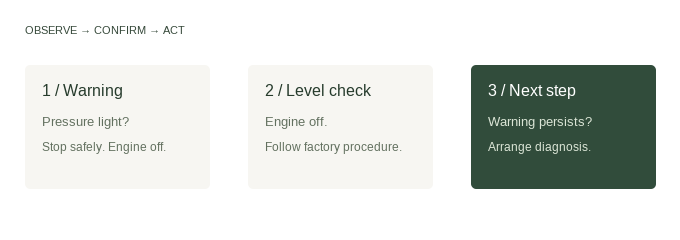
A workshop can identify the fluid and leak origin, then clean affected surfaces and verify that the odor does not return under appropriate conditions. Ask whether shielding or an undertray retained spilled oil. If smoke increases, a pressure warning appears, or there is a substantial leak, stop safely and arrange help. Do not spray household cleaner into a hot engine bay or use cabin fragrance to mask a developing problem.
- Record driving and ventilation conditions.
- Distinguish smoke from an odor only.
- Document recent maintenance or spills.
- Treat oil on hot exhaust parts as an urgent concern.
Separate the odor from a cleaning decision
Record whether the smell starts at idle, during acceleration, after a recent service or when the cabin fan is running. If smoke, a pressure warning, an overheating warning or a suspected fuel or electrical problem is present, respond to that condition before planning a cleaning task.
Photograph a visible wet area before wiping it away. A controlled engine-bay cleanup can help a later inspection reveal fresh leakage, but fragrance and degreaser do not repair the source. Give the repairer the odor pattern and recent service details so the investigation is connected to when the symptom actually appears.
An odor observation log
| Record | Useful detail |
|---|---|
| Timing | Cold, warm, after service or under load |
| Location | Underhood, cabin airflow or outside |
| Associated sign | Smoke, wet area or exact warning |
| Recent change | Oil service, spill, repair or cleaning |
Common questions
Can the smell come from oil with no puddle?
Yes. Oil can collect on shielding or reach hot parts before it reaches the ground.
Does opening the windows make it safe to continue?
Ventilation does not identify or repair the source. Assess smoke, leakage, and warning signs first.

