Use the viscosity and performance specification permitted for the engine and conditions. Hot weather does not automatically authorize thicker oil. Review any manufacturer guidance for towing, sustained load or severe use, and keep the oil level within the specified range.

Start with the actual engine requirement
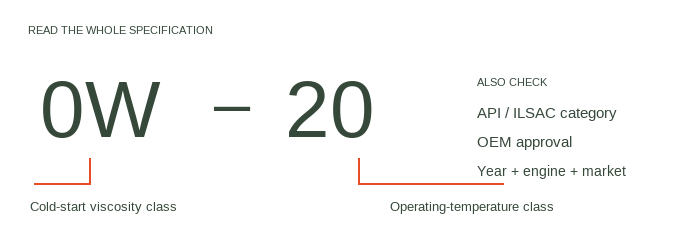
Read the manual’s viscosity instructions and any temperature chart for the correct engine and market. Some engines use one preferred grade across a broad climate range; others provide defined alternatives. Do not borrow a chart from another vehicle or use a higher second number as a universal protection upgrade.
Distinguish ambient heat from operating demand
A parked thermometer does not describe every engine operating condition. Towing, sustained high load and the manufacturer’s listed special conditions may change maintenance requirements. Check those instructions alongside the oil selection. If the car is overheating, investigate that fault rather than treating a different oil as the repair.
Keep level and service timing reliable
Check the oil by the prescribed method, especially before demanding journeys. A low level is not corrected by choosing a premium grade at the next service. Record top-ups and review the due limits. Do not extend the interval merely because the bottle advertises heat resistance or synthetic technology.
- Match the complete required approval.
- Use only permitted viscosity alternatives.
- Review towing and special-use instructions.
- Keep the correct measurement procedure consistent.
Prepare for travel sensibly
Carry a compatible top-up supply if the route or consumption history makes that useful. Keep the bottle securely stored within suitable conditions and avoid spills. If a warning or abnormal temperature appears, respond according to the vehicle manual. Extra viscosity cannot make an unresolved cooling or lubrication problem safe to ignore.
Common questions
Should every car use 5W-40 in summer?
No. The engine’s permitted grades control.
Does the second oil number show the hottest outside temperature?
No. It is a high-temperature viscosity grade, not an ambient-temperature ceiling.
Does overheating mean the oil grade is wrong?
Do not jump to that conclusion. Follow the vehicle’s temperature-warning instructions and investigate the cooling or engine condition. A thicker oil is not a substitute for identifying the actual cause.
