A new oil leak after an underside impact needs prompt inspection for pan, plug, line, shield, and other damage. Stop safely if there is a pressure warning, substantial leak, or new engine noise. Do not continue driving merely because the impact looked minor from the driver's seat.

Secure the situation first
Pull into a safe place, switch off, and stay clear of traffic. Check for obvious fluid loss from a safe standing position. Do not reach beneath the vehicle or remove a hanging shield in an exposed roadside location. If a warning appeared after the impact, record its exact wording. Multiple systems can be damaged underneath, so engine oil is only one possible fluid and a color guess is not enough.
Collect evidence for recovery and repair
Photograph the ground, accessible damaged shielding, and the warning display if safe. Record the event location and whether the car immediately developed vibration, noise, steering changes, or a smell. A proper inspection may need lifting equipment and shield removal. A dented pan can matter even without a large exterior hole because the impact and surrounding components need assessment. Do not start the engine as an improvised way to demonstrate the leak.
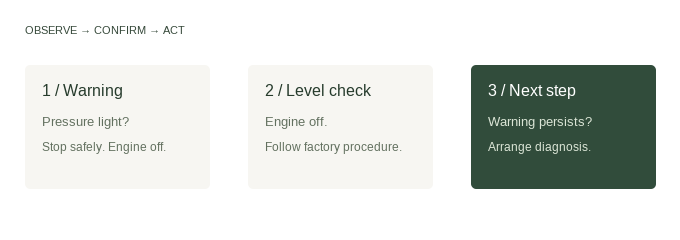
Ask for a complete underside inspection
The repairer should identify the fluid, source, and affected components before deciding what can be reused. Ask about the oil pan and drain connection, lines, shielding, and any adjacent damage indicated by the event. Verify the correct level and repair outcome before the vehicle returns to service. If the engine operated after losing oil or showing a pressure warning, disclose that history so the technician can assess the implications.
- Save impact and warning details.
- Do not assume a small puddle is the full loss.
- Avoid roadside underbody work.
- Document engine running time after the warning.
Common questions
Can a damaged shield cause the leak location to mislead?
Yes. Shielding can carry or retain fluid away from the actual damaged component.
Should I top up and drive away?
A top-up does not assess impact damage or make an active major leak safe. Arrange inspection or recovery as warranted.