0W-16 and 0W-20 are different high-temperature viscosity grades despite sharing the 0W classification. Use the grade specified for the engine. ILSAC GF-7B applies to 0W-16 and does not make that oil a universal replacement for GF-7A applications.

Why a newer label is not a universal substitute
Industry performance categories and viscosity grades answer different questions. A bottle can carry a current performance category and still have the wrong viscosity for an engine. The API guide treats the B branch separately for 0W-16. Do not read a newer category date as permission to move every older engine to that grade.
Check any temporary alternative carefully
Some manuals permit a different grade when the preferred one is unavailable, often with a follow-up instruction. Apply the exact instruction for the correct engine and market. The fact that another hybrid or another model year allows 0W-20 does not establish the rule for yours.
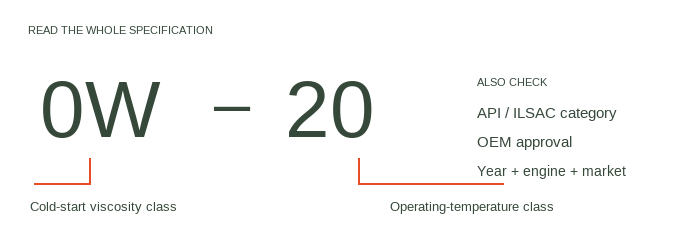
Verify the product variant
Read the current label and data sheet for the exact viscosity, including the required approval. Do not assume the 0W-16 and 0W-20 versions of a familiar product share every application claim. Keep a photo of the bottle used for a top-up so later service decisions use facts rather than memory.
- Confirm the engine’s preferred grade.
- Read the ILSAC branch and manufacturer requirements.
- Apply only stated alternate-grade exceptions.
- Do not change viscosity to chase fuel-economy claims.
Treat a mistaken fill as a specification question
If a service invoice lists the other grade, verify what actually went into the engine and compare it with the manual. Ask the provider to resolve the mismatch. Normal operation immediately after service does not establish long-term suitability, and a generic online statement cannot replace the engine’s approved requirement.
Common questions
Is GF-7B better than GF-7A?
They serve different viscosity applications; B is not a universal upgrade over A.
Are 0W-16 and 0W-20 equally suitable for all hybrids?
No. Hybrid is a powertrain description, not one oil specification.
Is an online oil finder enough to settle a conflict?
Use it as a cross-check, then confirm the exact engine and market manual. A selector with the wrong engine detail can produce a plausible-looking recommendation that still does not fit the vehicle.