ILSAC GF-7A and GF-7B entered the API guide in 2025. The B branch applies to SAE 0W-16. Choose the branch, viscosity and additional approvals appropriate to the engine; GF-7B is not a universal replacement for GF-7A.

Use the branch as an application check
The A and B labels are not a simple good-and-better ranking. The separate low-viscosity branch matters when comparing a bottle with the vehicle manual. A current label on the wrong viscosity does not establish compatibility. Write down the required grade before evaluating the performance category.
Understand older recommendations carefully
A manual may name a category that was current when the car was built. The API guide provides guidance on successor categories, including the distinct A and B branches. Retain the original engine’s viscosity and any manufacturer approval. Do not interpret a newer category as permission to substitute any modern oil.
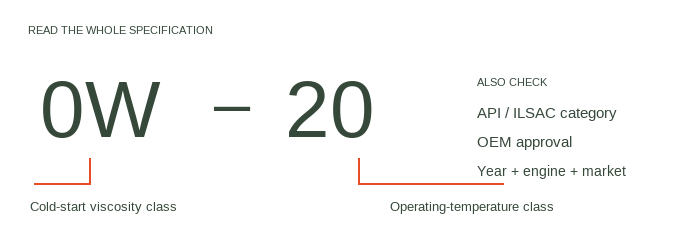
Avoid outdated shelf information
The API guide notes GF-6 category obsolescence from October 2026. Older product photos and category web pages can lag behind current documentation. Check the current bottle and data sheet, and use the latest official guide when a retailer’s chart conflicts. Existing stock should still be evaluated against the actual vehicle requirement and product claim.
- Check the exact viscosity grade.
- Read whether the label is the A or B branch.
- Keep separate manufacturer approvals in view.
- Verify current documentation before purchase.
Make the change at the product-selection stage
A category update does not by itself demand draining correctly specified oil early, changing the filter interval or adding a supplement. Follow the vehicle’s maintenance instructions and select a suitable current product for the next service. If you need an urgent top-up, use the manual’s substitution guidance rather than treating the newest label as a universal answer.
Common questions
Can GF-7B replace every older ILSAC oil?
No. Its 0W-16 application and the engine’s requirements matter.
Does a GF-7 label extend the oil-change interval?
No. Apply the vehicle’s time, mileage and operating-condition limits.