API categories describe performance requirements for particular engine-oil applications. Read the category alongside viscosity and any manufacturer requirement. A licensed gasoline oil and a diesel-focused oil are not interchangeable merely because both carry API information.

Identify the application first
Look at the engine and its manual before interpreting the bottle. Gasoline and diesel requirements can use different categories, and some products carry multiple claims. Do not assume a diesel product is a stronger upgrade for a gasoline engine. The exact label and required application must match.
Separate the grade from the category
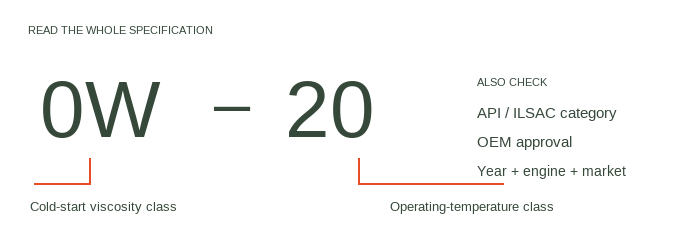
The large viscosity numbers and the API category supply different information. Matching only one is incomplete. Keep any additional manufacturer approval in the comparison, too. An engine may require an oil that meets both an industry category and a separate approval, so a category alone cannot settle the choice.
Treat licensing claims as something you can verify
API maintains licensing and certification information. A vague statement that an oil has high quality is not the same as a clear category claim or licensed mark. If the label is unclear, ask the marketer for the current product data and verify the precise brand and viscosity variant. Do not infer certification from similar packaging.
Common questions
Does a newer API letter make every oil suitable?
No. Application, grade and other vehicle requirements still matter.
Can one bottle carry gasoline and diesel claims?
Some can. Read its exact listed categories and compare them with the engine requirement.
Should I copy a category chart from an old forum post?
Use current API documentation and the vehicle’s requirement. An old chart can omit later categories or status changes, while a remembered category name can leave out the viscosity and application restrictions.