If braking changes, the pedal sinks or a brake-fluid leak is suspected, stop safely and arrange recovery and inspection. Adding fluid does not repair the hydraulic fault.

Treat altered braking as the urgent issue
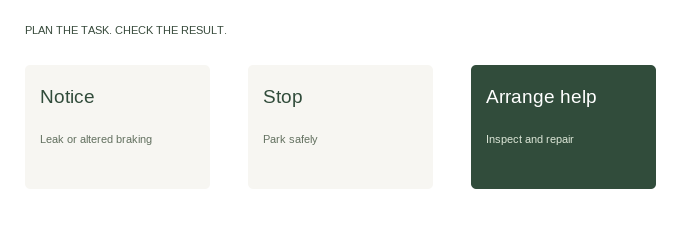
A soft or sinking pedal, unusually long travel, a brake warning or fresh fluid near a wheel can indicate a serious problem. Do not make repeated road tests to confirm that the pedal is getting worse. Park safely and arrange help when braking performance is uncertain.
A low reservoir level can have more than one cause, including brake wear or leakage, so the reservoir alone does not identify the failed part. Describe the pedal response, warning message and any visible fluid to the repairer. Do not assume the brake system is safe because the warning disappears after a top-up.
Make observations without opening the system
From a safe parked position, look through the reservoir wall if the level marks are visible and note any fluid on the ground or around accessible areas. Keep hands away from hot brakes and do not crawl under an unsupported vehicle. Avoid touching or tasting an unknown fluid to identify it.
Bosch’s brake-fluid service guidance distinguishes visible checks from a complete hydraulic-system assessment. A fluid’s color cannot show every condition affecting performance. A leak investigation may need pressure checks and inspection of lines, hoses, calipers, cylinders and related components.
Repair, bleed and verify the whole circuit
Ask the workshop to identify the leaking component and any related damage, rather than quoting only for a fluid refill. The completed work may require the correct fluid, a supported bleeding process and equipment for the vehicle’s braking layout.
Keep fluid away from paint and prevent contamination of the reservoir. Do not substitute engine oil or another hydraulic product. After repair, ask what was checked before the vehicle was returned to service and retain the parts and fluid details. A recurring level loss or changed pedal needs immediate follow-up, even after a recent repair.
Describe the symptom for recovery or repair
| Observation | Record |
|---|---|
| Pedal response | Soft, sinking, longer travel or changed braking |
| Warning | Exact dashboard message |
| Visible fluid | Location and when it appeared |
| Recent work | Parts serviced and date |
Common questions
Can I keep topping up and drive to work?
A suspected leak or altered braking requires inspection. Topping up does not restore a damaged hydraulic circuit.
Does dark fluid prove the location of a leak?
No. Identify the fluid and inspect the system. Appearance does not locate the failed part.
