Weak A/C cooling does not establish a low refrigerant charge, and a single can gauge cannot measure the remaining refrigerant mass. Identify the system and fault before adding refrigerant.

Identify the system before buying a can
Read the vehicle’s refrigerant label and record the refrigerant type and charge information. Similar-looking service products can contain different refrigerants, oils, dyes or sealants. Do not mix types or use adapters to make an incompatible fitting connect. Store the label information with any service quote.
The EPA distinguishes topping off from evacuation and recharge. It notes that remaining refrigerant quantity cannot simply be determined for a top-off and that adding refrigerant does not permanently repair a leak. Those distinctions are central to deciding what service the symptom actually needs.
Diagnose the cooling complaint
Describe whether airflow is weak, air is warm, cooling changes with road speed or performance fails only after some time. Cabin filters, airflow controls, electrical faults, condenser airflow and refrigerant-system faults can create different patterns. Adding refrigerant without identifying the issue can leave the original problem and introduce an incorrect charge.
A pressure reading depends on operating conditions and does not directly weigh the refrigerant in the system. Do not keep adding until a needle reaches an appealing color band. Refrigerant handling can involve high pressure, cold injury and system-specific hazards; a controlled diagnosis and recovery process may be the sensible next step.
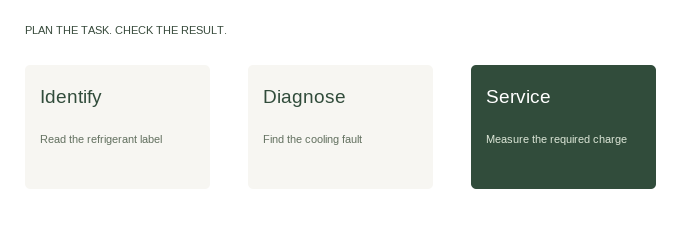
Compare the complete service proposal
Ask whether the quote includes leak investigation, recovery, evacuation, a measured charge and a final performance check. Record any proposed additive and why it is needed. A top-off and repair-plus-recharge are different services, so their prices are not directly comparable without the scope.
The EPA’s small-can sales provisions do not establish that a particular recharge method is suitable for your system. Avoid venting refrigerant and use a qualified service route when recovery or repair is required. If cooling worsens or unusual noise appears after an attempted addition, stop the experiment and provide the product and quantity information to the repairer.
Ask what the A/C service includes
| Service | Question to ask |
|---|---|
| Top-off | How is the proposed addition being determined? |
| Evacuation and recharge | Is the final charge measured to the system label? |
| Leak repair | What evidence identifies the leaking component? |
| Final check | Was performance verified under the relevant conditions? |
Common questions
Does a low-side gauge show how many ounces are missing?
It measures pressure under particular conditions, not the remaining refrigerant mass. Correct charge assessment requires the supported service method.
Will recharging permanently fix a leak?
No. Adding refrigerant changes the charge. The leak still needs to be located and repaired where applicable.

