An older engine that uses oil still needs the correct specification, a dependable level log, and a cause-based repair decision. Age alone does not prove that heavy consumption is unavoidable. Separate external leaks, ventilation concerns, and internal consumption before choosing a product or major repair.

Create a realistic maintenance baseline
Check the oil under the same manual-specified conditions and record every measured addition with mileage. Keep the level in range without overfilling. Collect whatever service and repair records exist, and note whether oil use has been stable or recently increased. A regular known quantity is useful information; the statement that all old cars burn oil is not. Top-ups also do not automatically replace scheduled oil and filter service.
Prioritize affordable evidence before assumptions
A workshop can inspect accessible leak sources, the crankcase-ventilation arrangement, and relevant intake components before deciding whether internal testing is needed. Record smoke, rough running, and fault codes. Ask what each proposed test can establish and how its result would change the repair decision. Avoid using heavy oil or an additive solely to suppress symptoms when it conflicts with the manufacturer's requirements.
Make the ownership decision with facts
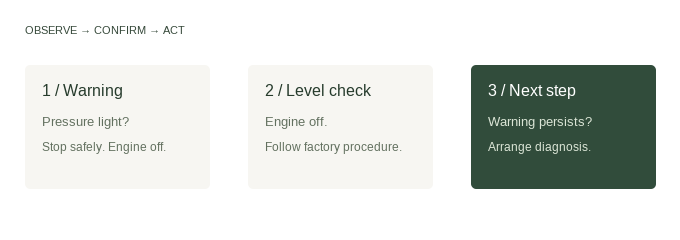
Compare the confirmed repair, continuing oil cost, downtime, and overall vehicle condition. A high-mileage oil meeting the required specification may be a product option, but it is not evidence that damaged components are repaired. Keep receipts and a written monitoring plan if you choose to defer a non-urgent repair. Pressure warnings, serious noises, heavy smoke, or rapid leakage require a different response from ordinary planned monitoring.
- Keep measured consumption and service logs.
- Ask for confirmed causes and test results.
- Compare repairs with the whole vehicle's condition.
- Do not let age justify ignoring a new warning.
Common questions
Should every older car use thicker oil?
No. Use the engine's approved specifications; mileage alone does not authorize a different grade.
Can I monitor instead of repairing immediately?
That depends on the confirmed cause and severity. Establish a clear plan and stop conditions with the repairer.