Fuel odor, a rising oil level or a change in running behavior deserves investigation. Record repeatable readings and the CR-V's exact engine and year; a smell alone cannot quantify fuel dilution or establish a particular repair.
Honda CR-V
Model-family oil and maintenance guidance.

CR-V dilution concerns — what to confirm
A CR-V owner may notice fuel odor during a level check, especially after repeated short trips. Other observations matter: whether the level is rising, whether the engine reaches normal temperature, recent oil service, warning messages and changes in fuel economy. Compare measurements only when taken under the same manual-specified conditions. An overfilled service can otherwise resemble a new level increase.
A practical way to handle it
Keep a log of the odometer, trip pattern and measured level. If oil is above the permitted range, seek the manual's guidance and a qualified assessment before continuing routine use. Ask the shop to distinguish an incorrect fill, fuel contamination and a measurement issue. Give them the exact engine, diagnostic messages and any previous repairs or software work.
Mistakes to avoid
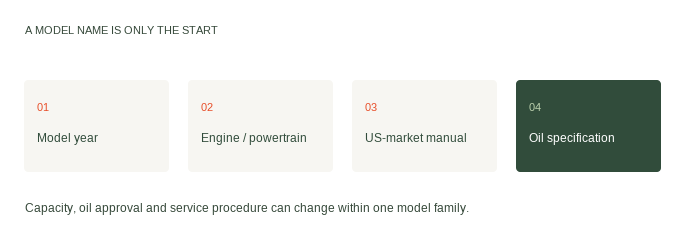
Do not assume every CR-V has the same engine or falls under the same program. Use Honda's official VIN recall lookup and ask a dealer about applicable service information. Do not try to cure the concern by adding thicker oil, using an unapproved additive or driving hard to burn contamination away. The underlying condition needs a reasoned diagnosis.
Your working checklist
- Record year, engine, mileage and recent service.
- Repeat level checks consistently.
- Describe trip length and warning messages.
- Ask for written findings and VIN-specific applicability.
Common questions
Does fuel smell prove that an engine is damaged?
No. Odor alone does not measure contamination or establish damage. A rising level, warning, poor operation or repeated concern provides useful evidence for professional inspection, and testing may be needed.
What information should I give a shop about the fuel smell?
Provide engine and year, mileage, recent oil work, repeated level readings, trip length and any warnings or poor running. These details help distinguish a service overfill, measurement issue and possible contamination.