Use a short repeatable inspection to spot changes: check appropriate fluid levels, tires, lights, wipers and visible leaks, then record anything that needs service.

Build a routine around observable checks
Set aside a consistent time when the car can be parked safely and the required checks can be made under their proper conditions. Start with the dashboard messages and a walk around the vehicle. Note a new puddle, damaged tire, loose item or lighting fault before it becomes part of a busy departure.
NHTSA’s road-trip guidance highlights tires, wipers, fluid levels and battery checks among the maintenance priorities. Use those categories to organize your routine, then connect each observation to the relevant task. A monthly reminder is an inspection habit, not a replacement for a mileage-based service that becomes due earlier.
Check the systems using their own methods
Read engine oil only under the correct measuring conditions and check coolant only when the supported cold inspection is safe. Inspect other accessible reservoirs without introducing contamination. Where a fluid system has no owner-supported level check, note the service requirement rather than opening an unfamiliar plug.
Measure tire pressures against the vehicle’s tire information and the appropriate cold-check conditions. Test lights and wipers, clear visibility obstructions and check washer operation. Inspect battery connections visually from a safe position; corrosion, a damaged case or a starting concern calls for its own follow-up.
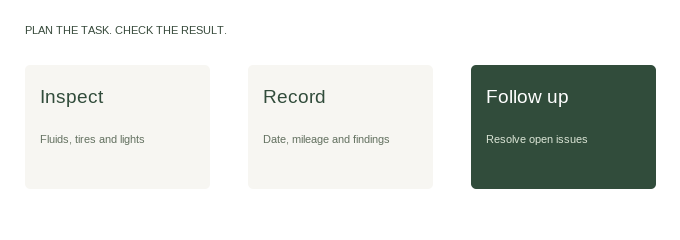
Turn findings into a useful record
Write the date, mileage and the observation, including which warning or reservoir was involved. Distinguish a normal stable reading from a sudden change. A photograph of a repeated wet area or an exact message is more useful than a log entry saying only car checked.
Assign a next action and date for non-urgent findings and deal immediately with serious braking, pressure or overheating warnings. Keep receipts and completed service details in the maintenance log. Before a long trip, revisit any unresolved issue instead of assuming the last monthly check still describes the car’s current condition.
A repeatable inspection record
| Area | Record |
|---|---|
| Fluids | Measured level, conditions and any change |
| Tires and lights | Pressure or visible fault needing action |
| Wipers and washer | Visibility and spray performance |
| Leaks or warnings | Exact location or message |
| Follow-up | Action, responsible person and target date |
Common questions
Does a monthly checklist set my oil-change interval?
No. Use the applicable service schedule or monitor for timing. The checklist helps identify changes between services.
What should I write down?
Record date, mileage, exact observations and the follow-up action. Include the product and quantity for any supported top-up.
