A repeatably rising oil level can reflect an initial overfill, inconsistent checking, or another fluid entering the crankcase. Recheck using the manual, document the trend, and arrange diagnosis if the rise persists. Removing excess oil without finding the cause can leave the underlying contamination unresolved.

Separate a single high reading from a trend
Use level ground and the specified temperature and waiting conditions. On a dipstick, wipe, reseat fully, and identify a clear boundary; on an electronic system, satisfy the measurement requirements. Note whether the first high reading followed an oil change or developed later without any additions. Compare readings under the same conditions. Do not subtract an assumed volume from the height above the maximum mark because sump designs vary.
Watch for accompanying evidence
Frequent short trips and some operating conditions can be relevant to fuel accumulation, while coolant loss raises a different question. Record fuel odor, changed running, overheating, coolant reservoir changes, and any warning messages. None of these observations alone confirms contamination or its origin. An oil-analysis laboratory can measure relevant indicators when the technician considers it useful; smell and a photograph cannot quantify fuel dilution or identify a failed gasket.
Correct the cause and then the oil condition
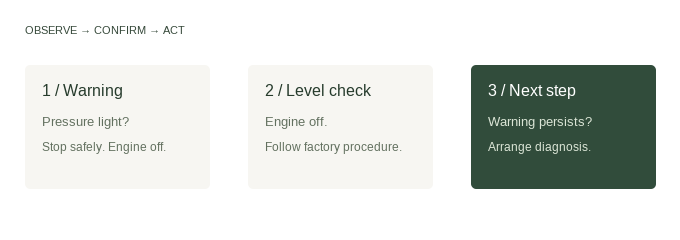
Contact a workshop with the trend and recent-service details. It may need to inspect the fuel system, ventilation, cooling system, or engine-specific control strategy. An oil change can remove contaminated lubricant, but it does not fix the route by which fuel or coolant entered. Follow manufacturer advice about operation and repair. If the reading exceeds the permitted range, avoid normal driving until it is assessed and corrected.
- Record dates, mileage, and checking conditions.
- Do not keep extracting oil as the only response.
- Track coolant only when safe and cold.
- Share short-trip and idling patterns with the technician.
Make the level trend repeatable before interpreting it
Use one repeatable measurement routine and record its conditions: parking surface, engine temperature, shutdown waiting time and dipstick or electronic-level procedure. A sequence taken by the same valid method is more useful than comparing an overnight cold reading with an immediate post-drive pull. Mark any oil additions on the same log.
If the apparent rise disappears when the checking method is corrected, retain that explanation with the record. If it persists without additions, changing the oil or removing the excess may correct the displayed level without resolving the cause. Tell the workshop about fuel odor, coolant-level changes, trip pattern and recent maintenance. Do not infer contamination solely from the trend or use a top-up capacity to estimate its severity; the next check should target the suspected mechanism.
Make the level trend repeatable before interpreting it
Readings used different conditions
Re-establish the factory measurement routine before describing a trend.
Valid repeated reading is above the allowed range
Keep the vehicle out of normal use until excess and cause are assessed.
Rise follows a documented top-up
Give the exact addition and product details to the person correcting the fill.
Common questions
Can short trips raise the level?
They can be relevant on some engines, but a persistent rise still needs the exact vehicle's guidance and diagnosis.
Can I prove fuel dilution by smell?
No. Odor is an observation; laboratory or engine-specific testing may be needed to establish the condition.
