Cloudy oil, a rising sump level, unexplained coolant loss, or overheating can justify checking for coolant contamination. None alone identifies a head-gasket failure. An unresolved combination of these symptoms needs professional diagnosis and a decision about whether the engine should remain off.

Distinguish the locations of the residue
A small creamy deposit under the filler cap after repeated short trips is different evidence from milky oil throughout the dipstick sample. Record both accurately and note whether the coolant reservoir level changes when checked cold under consistent conditions. Do not open a hot pressurized cooling system. Exterior coolant leaks can also lower the reservoir, while ordinary condensation can affect the cap area, so avoid deciding on a major repair from one photograph.
Protect the engine while arranging diagnosis
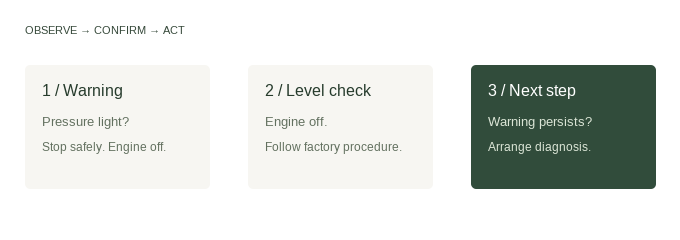
If oil is clearly contaminated, the level is above the permitted range, or overheating or pressure warnings are present, avoid further normal operation and arrange assistance. Replacing the oil does not seal a coolant path. Ask for the evidence supporting the proposed repair and how the lubrication and cooling systems will be checked after it. Keep samples only in suitable labeled containers if the repairer requests them.
- Photograph cap residue and dipstick condition separately.
- Track coolant only with the system safely cold.
- Record overheating and recent repairs.
- Do not add a sealant before discussing the diagnosis.
Common questions
Does milky residue always mean a blown head gasket?
No. Its location and the wider symptom pattern matter, and testing is needed to identify the cause.
Can I just change the oil?
An oil change may be necessary, but it does not resolve an ongoing coolant leak into the engine.
