Overheating and oil warnings can appear together but should not be treated as the same fault. Stop safely and follow the exact warning instructions. Do not open a hot cooling system. Once safe, document both oil and coolant observations so the repairer can investigate their relationship.

Respond to the active warning
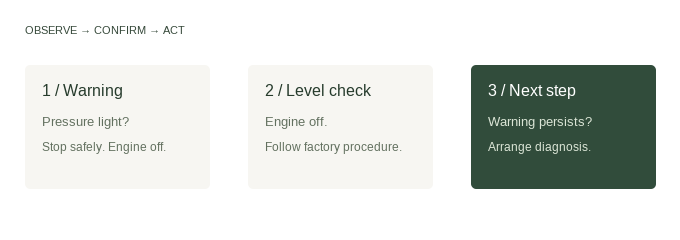
Read the displayed message and follow the manual's instructions for the condition. A running-engine oil-pressure warning requires a safe stop and engine shutdown. A cooling-system warning also needs the vehicle's prescribed response. Do not reach for a hot radiator or pressurized reservoir cap, and do not pour fluid into an unidentified opening. If there is steam, smoke, or a substantial leak, keep clear and arrange appropriate assistance.
Check each system under safe conditions
After cooling, the engine-oil level and cold coolant reservoir can provide useful observations using their separate procedures. Note whether oil is milky, coolant is falling, the sump level is rising, or a fresh exterior leak is visible. Those clues may be related, but none alone proves a head gasket or cooler has failed. Record recent repairs, the road load, and whether the heater or temperature gauge behaved unusually.
Find the cause before returning to normal use
A workshop may need cooling-system, lubrication, and engine-specific tests. Ask whether contamination is present and what evidence identifies its source. Changing engine oil does not fix a cooling fault, while adding coolant does not establish normal oil pressure. If the engine operated while overheating or showing a pressure warning, disclose that history so any resulting damage can be assessed. Keep the diagnosis and repair verification together in the service record.
- Never open a hot pressurized cooling cap.
- Record both temperature and oil messages.
- Keep cold coolant and oil trends separate.
- Report the duration of continued operation.
Common questions
Will adding oil fix overheating?
Only a correct diagnosis can establish the cause. Do not assume an oil top-up resolves a cooling-system fault.
Does overheating prove coolant entered the oil?
No. Look for evidence and use appropriate tests rather than assigning one repair to every overheating event.
