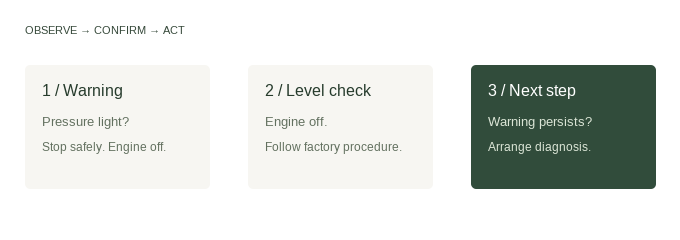
If the oil-pressure warning appears while the engine is running, pull over safely and switch the engine off. Check the level using your manual. A normal level does not prove pressure is safe; an unresolved warning needs professional diagnosis before the engine runs again.

First distinguish the warning
The oil-can symbol can refer to pressure, level, or service information depending on the vehicle. Read the actual message and the dashboard section of your manual. A pressure light during the ignition self-check may be normal before the engine starts. A pressure warning while running is a different situation. Do not keep revving the engine to see whether it disappears, and do not confuse an oil-life percentage with measured pressure.
Check without turning a warning into damage
Choose a safe place away from traffic, set the parking brake, and let hot components cool before opening the hood. Follow the specified waiting time and level-check method. If oil is low, use the correct specification and add only enough to restore the permitted range. Look from above for an obvious fresh spill, a loose filler cap, or evidence that a recent service left a leak. Avoid getting under a roadside vehicle.
Arrange a pressure diagnosis
Potential causes include an actual oil-supply problem, an unsuitable or incorrectly installed filter, oil contamination, or a sensor or wiring fault. None can be confirmed by the warning light alone. Tell the workshop whether the engine was hot, idling, cornering, or newly serviced. They may need an independent pressure measurement and the correct engine-specific specification. Stop conditions include a continuing warning, knocking, a major leak, or no reliable level reading.
- Record the exact message and when it appeared.
- Do not drive home to save a recovery charge.
- Do not add oil above maximum to chase a pressure reading.
What to record after a pressure warning
Once safely stopped with the engine off, write down the exact warning text, whether it appeared at start-up or while driving, and any unusual noise or fresh leakage. A photograph taken safely after stopping can preserve the wording. Do not restart solely to make a video of the lamp or to see whether it returns.
Check the oil level using the applicable factory method when that can be done safely. Give the workshop both the level result and the conditions of the warning. A normal level does not demonstrate normal pressure, and a sensor-related code does not by itself establish that the sensor is the failed part. Arrange roadside assistance or transport when pressure remains uncertain; the useful next step is application-specific diagnosis rather than a road test to reproduce the warning.
What to record after a pressure warning
Pressure warning while engine is running
Stop safely and switch the engine off; do not continue the trip to test it.
Normal oil level but pressure remains uncertain
Keep the engine off and arrange pressure-system diagnosis or transport.
Warning wording recorded after shutdown
Give the exact message, operating conditions and level observation to the technician.
Common questions
Can I drive with the oil light on?
An unresolved running-engine pressure warning is a stop-engine situation. Arrange assistance rather than assuming a short journey is harmless.
Does a full dipstick mean the sensor is faulty?
No. The dipstick measures the amount of oil in the sump, not the pressure reaching engine parts.