Oil level describes how much oil is stored for circulation; oil pressure describes part of the operating lubrication system. A full sump can coexist with inadequate pressure, and a low sump can exist before a warning appears. The two readings answer different maintenance questions.

What the level check can tell you
A dipstick or approved electronic measurement helps determine whether the stored quantity falls within a usable range. It does not measure bearing condition or prove that oil reaches every passage. Checking after shutdown allows oil to return according to the manufacturer's procedure. A level log is especially useful for spotting leaks or consumption between services. A dashboard oil-life display is a third thing: a maintenance estimate, not a direct measure of either quantity or pressure.
What a pressure warning means
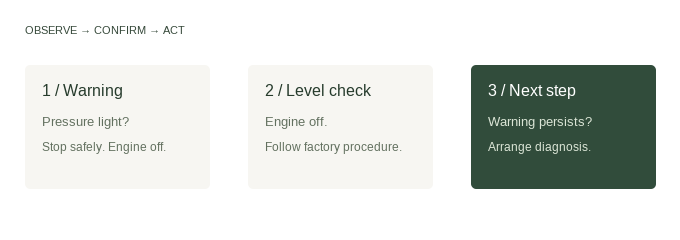
Pressure depends on the running engine and its lubrication system. A warning can arise from a real supply problem or a measurement fault. The safe response to a running-engine pressure warning is to stop safely and switch off, then follow the manual. Adding oil is relevant only if the verified level is low. Continuing to add when the level is already correct cannot prove that the pump, pickup, passages, filter, and sensor are working properly.
Ask for the correct test
When discussing a warning with a technician, separate the observed level from the displayed pressure or symbol. Record the conditions, including hot idle, acceleration, cornering, recent service, and unusual noise. An engine-specific pressure test can answer questions that a dipstick cannot. Avoid comparing an internet pressure number from another engine or expecting a dashboard gauge to be a precision diagnostic instrument. Supply the exact year, engine, and warning text.
- Level: check using the manual's conditions.
- Pressure warning: engine off safely.
- Oil life: follow the maintenance schedule.
- Do not use one reading to dismiss another warning.
Common questions
Will the light warn before the oil gets low?
Do not rely on that. Warning design varies, and routine level checks remain important.
Can oil be full but pressure low?
Yes. Quantity alone does not establish that the lubrication system is supplying oil correctly.
