A dashboard without an oil warning does not prove the level is correct. Some indicators monitor pressure, some vehicles separately monitor level, and oil-life displays estimate maintenance. Check the oil using the manual and correct a verified low reading before relying on the car.

Identify what your dashboard measures
Read the indicator descriptions for the exact vehicle. A pressure switch and a level sensor have different jobs, while a service percentage is different again. Not every car gives a warning as soon as its dipstick reaches minimum. The absence of a symbol cannot replace a routine level check. If an expected ignition self-check does not occur, the manual or a workshop can help establish whether the indicator system needs attention.
Use the dipstick or approved electronic check
Park level and meet the required temperature and waiting conditions. Obtain a repeatable reading before adding the correct specification in controlled amounts. Stop within the permitted range. Record mileage and additions so a gradual leak or consumption pattern is not hidden by memory. Do not wait for the warning to appear as a way to determine how much oil the engine can safely lose.
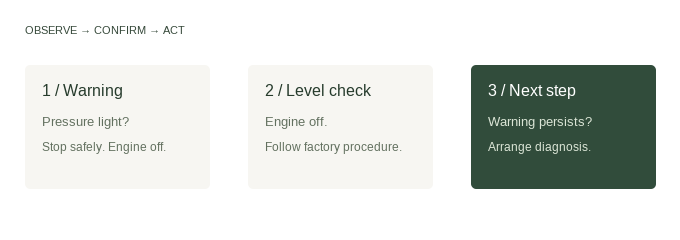
Investigate a repeated low level
If the oil falls again, inspect accessible areas for leakage and build a consumption log. Recent service, a missing filler cap, an undertray that catches oil, or internal consumption may be relevant. A workshop can review the trend and decide on testing. If a pressure warning, serious noise, or major leak does appear, stop safely and switch off even if previous low readings caused no apparent problem.
- Know whether each symbol means pressure, level, or service.
- Check consistently between oil changes.
- Measure rather than estimate top-ups.
- Do not test the warning by running the level low.
Common questions
Will the check-engine light warn about low oil?
Do not rely on it for oil level. Use the vehicle's specified oil-level check and indicator guidance.
Is minimum on the dipstick an emergency warning setting?
The marks define a measuring range; warning thresholds and system design are vehicle-specific.