If the correct dipstick shows no oil after a proper repeat check, do not assume the engine is safe to start. Confirm the method and identity of the dipstick, look for a major leak, and restore the specified level or arrange assistance. An empty dipstick is not a measurement of the entire sump volume.

Rule out a reading mistake
Park level, switch the engine off, and use the manual's temperature and waiting conditions. Remove, wipe, fully reinsert, and check the correct engine-oil dipstick. Very clean oil can be difficult to see, so use good light and inspect both surfaces for a defined wet boundary. Do not start the engine simply to coat the stick. If you cannot identify the component or obtain a reliable reading, seek help rather than adding oil blindly.
Add only through a verified procedure
Confirm the required specification and filler opening before topping up. Use small controlled additions and recheck as instructed until the permitted range is reached. Do not pour the full service capacity into an engine that has not been drained; some oil may remain below the dipstick range. If a large amount is needed, record it and investigate why. A recent change, loose cap, leak, or known consumption history can guide the inspection.
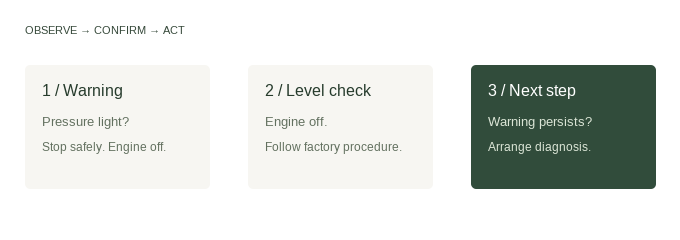
Consider the warning and noise history
If the engine had a pressure warning, serious rattle, or knocking before shutdown, a corrected level does not prove there is no damage or pressure fault. Arrange an assessment before further normal operation. A visible major leak also needs repair rather than repeated fills. Keep the last service invoice and photographs so the repairer can distinguish a fill issue from oil lost during use.
- Verify the dipstick and level ground.
- Do not add the full refill capacity blindly.
- Document every measured addition.
- Seek help after a pressure warning or serious noise.
Confirm the measuring setup before estimating a missing quantity
Check that you have identified the correct engine-oil dipstick and that it can be fully seated. Follow the handbook’s temperature and waiting conditions on level ground. Wipe and repeat the pull as instructed; a very clear oil film can be hard to distinguish from a dry stick. Do not reach near moving or hot components to improve the view.
If no level registers after a valid check, do not infer that the engine needs its entire service-fill capacity. The dipstick measures a marked range, not every remaining drop in the sump. Use the correct oil and the manufacturer’s controlled topping-up instructions if appropriate, rechecking between additions. A pressure warning, abnormal noise, substantial leak or unresolved inability to establish the level calls for assistance before starting or continuing to run the engine.
Confirm the measuring setup before estimating a missing quantity
Correct dipstick or checking conditions are uncertain
Establish the exact factory procedure before judging the level.
No level registers after a valid repeat check
Do not pour a complete service fill; establish a controlled correction or get assistance.
No reading accompanies a pressure warning or noise
Keep the engine off and arrange help.
Common questions
Does a dry dipstick mean the engine is completely empty?
Not necessarily. It means the level is not visible in that measuring range under the check conditions.
Should I drive to buy oil?
Do not start a vehicle with an unresolved no-oil reading. Obtain the correct oil another way or arrange assistance.