A new start-up rattle after service should be documented and assessed, especially if a pressure warning accompanies it. Verify the oil level, specification, and filter application. Do not assume every rattle is normal filter filling or repeatedly restart the engine to compare the sound.

Compare the symptom with the service history
Record whether the rattle occurred only on the first start after service or continues after later parked periods. Note its approximate duration, the warning lights, and whether the engine had the sound before the change. Keep the oil and filter product details. A recording from a safe position can help, but do not place a phone near belts or hot surfaces, and do not keep starting the engine just to improve the recording.
Verify the maintenance basics
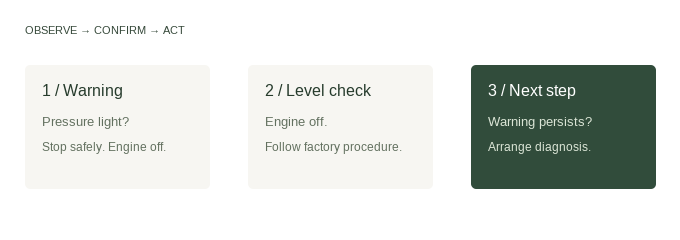
With the engine off, check the level using the manual. Review the filter application for the exact engine and whether cartridge seals or components were correctly fitted. Oil specification matters beyond the viscosity printed on the front of a bottle. A workshop may need to inspect installation details that are not visible from above. Do not tighten housings or replace parts without the appropriate procedure and torque information.
Escalate based on warnings and persistence
If the pressure warning remains on while running, stop safely and arrange assessment. Persistent or worsening noise also deserves an engine-specific diagnosis because timing components, accessories, lubrication, and other sources can sound similar. Ask the service provider how it will check the complaint without unnecessary engine operation and what evidence supports the repair. A service reminder reset has no effect on a mechanical rattle.
- Keep the oil and filter invoice.
- Record first-start versus repeat-start behavior.
- Use the correct level-check method.
- Stop for an unresolved pressure warning or heavy noise.
Common questions
Is a brief rattle always harmless?
No universal duration proves safety. Compare with manufacturer guidance and assess new or changed noise.
Can a different filter help?
The filter should meet the exact application requirements. A diagnosis should establish whether it is responsible.