Thick deposits under the cap or visible in the engine deserve an assessment of service history, operating conditions, and contamination. Do not assume an aggressive chemical flush is safe. A deposit-removal plan should follow the engine's condition and manufacturer guidance rather than a promise on a bottle.

Assess what is visible and what is not
A filler opening shows only a limited part of an engine. Photograph the material without scraping it into the engine and record the maintenance history as accurately as possible. Dark staining, varnish, and thick deposits are not identical conditions. Note frequent short trips, missed services, coolant concerns, and persistent fuel odor. Do not dismantle covers merely to satisfy curiosity unless you have the correct procedure, replacement seals, and tools.
Consider the lubrication risk
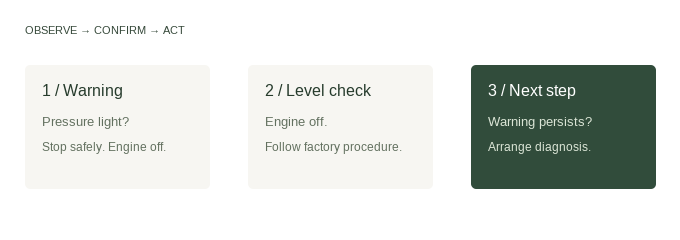
An engine with substantial deposits may need inspection beyond a routine drain and refill, particularly if pressure warnings or noise are present. Mobil describes contamination and oxidation as factors in oil deterioration; the specific cause still needs vehicle-level evidence. A large amount of loose material can complicate any cleaning approach. A pressure warning remains a stop-engine situation even when sludge seems like an obvious explanation.
Build a conservative maintenance plan
Ask a qualified repairer to explain whether inspection, mechanical cleaning, repairs, or a carefully specified service plan is appropriate. Use the required oil and filter and document the new baseline. Avoid stacking additives or extending the interval because the oil now looks lighter. If buying a used vehicle, request records and an assessment instead of accepting a freshly cleaned filler cap as proof that the whole engine is clean.
- Keep photographs and service records.
- Do not dislodge deposits into the engine.
- Investigate contamination sources.
- Follow an engine-specific cleaning decision.
Common questions
Will synthetic oil instantly remove sludge?
Changing oil type does not establish that a heavily deposited engine can safely clean itself or that the underlying problem is fixed.
Should I shorten the next interval?
Use the repairer's engine-specific plan and manufacturer requirements; there is no universal recovery interval.