The right comparison is between specific products that meet the engine’s required grade and approvals. High-mileage branding adds a formulation claim; it does not mean every older engine needs it or that ordinary compliant synthetic oil becomes unsuitable at a fixed odometer reading.

Filter choices by specification first
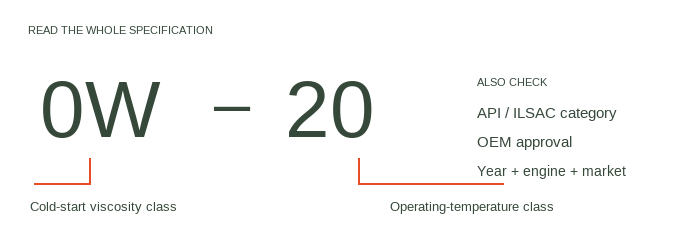
Read the vehicle requirement and remove any product that does not match. Only then compare the standard and high-mileage variants. Their approval lists can differ even when the front labels share a brand and viscosity. A product family name is not enough evidence of compatibility.
Read the reason for the high-mileage variant
Manufacturers may describe features intended for older engines, but those claims are product-specific. Distinguish them from independent test results and avoid assuming a guaranteed effect on your engine. An existing leak, unusual consumption or pressure concern requires its own assessment rather than a promise based on packaging.
Keep the decision measurable
Record the service and use a consistent level-check routine if consumption is part of the reason for switching. Do not change several variables at once by adding supplements and changing viscosity simultaneously. Clear records are more useful than a subjective impression after one short drive.
- Compare current approvals of both variants.
- Retain the required viscosity.
- Keep the manufacturer’s service limits.
- Save product labels and measured additions.
Choose without creating an artificial threshold
An engine can have high mileage and sound maintenance history without requiring a special product. Another engine may have a problem at lower mileage. Base the choice on requirements and specific findings, then price and availability among suitable oils. The odometer alone cannot tell you which additive package will address an unknown symptom.
Common questions
Can a healthy older engine stay on regular synthetic?
Use a compliant product according to the manufacturer’s requirements; high-mileage branding is not a universal obligation.
Can I compare only the bottle price?
Compare the full service quantity and required specification, not just one container’s price.
Should I add a supplement at the same time?
Do not change several variables without a clear approved reason. A measured comparison is easier when the oil product is known and additives have not turned it into an undocumented mixture.