A missing or loose oil filler cap can allow oil escape and contamination, depending on the engine. Stop safely, switch off, and inspect only after cooling. Verify the level and fit the exact correct replacement before normal operation; do not improvise a rag or loose cover over the opening.

Check the immediate condition
Note how the missing cap was discovered and whether the car was recently serviced. Look from above for splashed oil, smoke, or a cap resting near moving parts, but do not reach into a running engine bay. A burning smell can indicate oil on hot surfaces. Record warning messages and unusual running. If a pressure warning occurred or substantial oil escaped, arrange an assessment rather than simply replacing the cap and assuming all is well.
Prevent a second problem
Keep dirt and loose material away from the open filler neck. A temporary rag can fall into the engine or contact hot components and is not a safe driving repair. Obtain the exact cap and seal suitable for the engine. Check the level using the manual and add only the approved specification if needed. Do not pour the full service capacity into an undrained engine. Document the amount required to restore the permitted range.
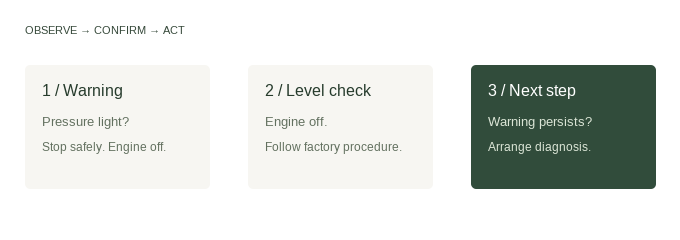
Clean and verify the result
Exterior oil should be cleaned appropriately once components are cool, with attention to hot exhaust areas, belts, connectors, and retained oil in shielding. A workshop can assess contamination concerns and any warning or noise history. Keep the service invoice and photos if the event followed maintenance. After the correct cap is fitted and concerns are resolved, monitor for fresh leakage and make sure the level remains stable.
- Engine off before checking the cap area.
- Use the exact cap and sealing arrangement.
- Keep loose fabric and debris out of the opening.
- Document warnings and measured top-ups.
Common questions
Can I drive with a rag in the filler hole?
Do not improvise a filler cap with loose material. Obtain the correct part or arrange assistance.
Does a missing cap always damage the engine?
The outcome depends on oil loss, contamination, and operation. Assess the evidence rather than assuming either damage or safety.