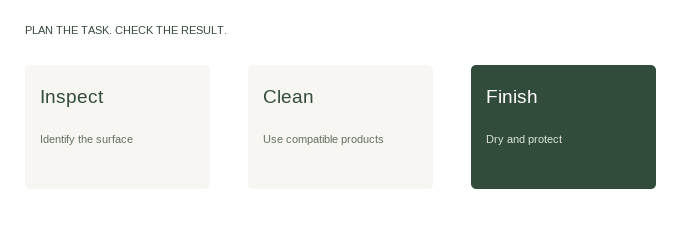
Wash and inspect the surface first. Match any water-spot treatment to the affected material, and distinguish a removable deposit from damage etched into the finish.

Start by identifying the surface and mark
A ring on glossy paint, a mark on glass and a stain on matte trim are different applications. Wash away loose contamination, dry the surface and inspect in good light. Note whether the mark changes after ordinary cleaning or remains fixed. Do not assume every pale ring needs the same acidic or abrasive remover.
Check existing coatings and repaired areas before treating a whole panel. A product described broadly as a water-spot remover may clean chemically, polish abrasively or combine functions. Its intended surfaces and exclusions matter more than the name on the front of the bottle.
Escalate one controlled step at a time
Choose the least aggressive suitable process and test a small area according to the instructions. Work on cool surfaces, use clean applicators and remove residue as directed. Do not mix household acids with other cleaners or leave a treatment sitting while you move to another job.
Meguiar’s A3714, for example, is described as an abrasive spot-removal and polishing product with exclusions for flat, matte and satin finishes. That is a useful reminder to check the mechanism and finish compatibility. It is not permission to polish any marked surface or to use the same applicator on glass, plastic and paint without checking each application.
Know when a spot is damage
A deposit can be removed from the surface, while etching has changed the surface itself. Repeated aggressive polishing can remove more clear coat without delivering the result you expected. If a test does not improve the mark, reassess the material and damage before increasing pressure or adding a stronger product.
Once the area is clean, renew protection only as the selected product requires. Reduce recurrence by washing and drying in shade and preventing rinse water from drying into rings. Keep a note of the treatment, surface and outcome so the next mark can be assessed from evidence rather than another sequence of guesses.
Choose by the affected surface
| Surface | Check before treatment |
|---|---|
| Glossy paint | Coating condition and product abrasiveness |
| Matte or satin finish | Explicit finish compatibility |
| Glass | Tint, coating and nearby trim restrictions |
Common questions
Is vinegar safe for every water spot?
A household recipe does not establish compatibility with every coating, trim or repaired finish. Use a treatment labeled for the affected material.
Will a water-spot remover fix etched clear coat?
The result depends on the depth and type of damage. A persistent etched mark can need assessment beyond surface cleaning.
