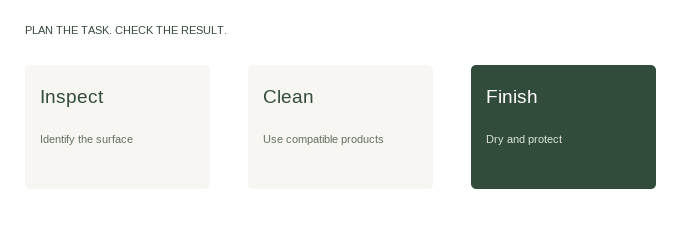
Use a glass cleaner compatible with the glass, tint and coatings, then clean with one fresh cloth and finish with a separate dry cloth.

Separate the glass surfaces
Exterior glass collects road film, insects and mineral deposits; interior glass collects dust and a different film from the cabin. Use separate clean towel faces for the two jobs. Check whether the inside surface has aftermarket tint, printed elements or special coatings before choosing a chemical or abrasive tool.
Cool glass in shade is easier to finish without streaks. Remove loose grit first and avoid dragging contamination across the surface. Do not scrape a rear window’s heating elements or use an abrasive pad simply because a mark survives the first wipe. Identify the residue before escalating the cleaning method.
Control the product and the cloth
Apply cleaner using the product’s directions. For an interior window, applying a controlled amount to the cloth can help keep liquid away from dashboard electronics and trim. Clean a manageable area, turn the cloth to a fresh face, then finish with a second dry cloth before residue dries.
Inspect from a different angle and from the opposite side of the glass. Using different wipe directions inside and outside can help you locate the side with a remaining streak. If the cloth smears instead of clearing the film, replace or clean it rather than adding progressively more spray.
Finish around the equipment
Keep cleaner away from camera housings and do not remove covers to reach hidden glass. Follow the supported method for camera areas and displays. Tesla’s glass instructions, for example, caution against scraping and abrasive fluids; coating and camera restrictions also need to be considered when selecting a treatment.
Clean accessible window edges when the task permits, then wipe surrounding trim dry. Check wiper blades and washer performance separately. Clean glass cannot compensate for damaged blades or a washer reservoir filled with the wrong product, and a hydrophobic coating is a separate application with its own compatibility requirements.
Troubleshoot the remaining mark
| Observation | Next check |
|---|---|
| Smears move with the cloth | Replace the towel face |
| Streak visible only from inside | Identify which glass surface holds the film |
| Fixed rough or etched patch | Assess mineral damage before abrasion |
Common questions
Why do streaks return after the glass looked clean?
A contaminated towel, excess product or residue left on warm glass can become visible from another angle. Recheck with a fresh dry cloth.
Can I use one cleaner on tinted glass and screens?
Only when the product and component instructions permit both applications. Screens, tint and ordinary exterior glass can have different requirements.

