Obvious flakes, chips, or unusual glitter in drained engine oil should be documented and assessed before further normal operation. A photo cannot identify the worn component or prove that every particle is metal. Preserve the oil-service details and ask the repairer how to retain a useful sample.

Document what you found
Photograph the drain pan, filter, and any particles before cleanup. Record whether the pan was clean before draining, which engine the oil came from, and whether tools or dirt could have contaminated the sample. Keep the service mileage, oil specification, filter part number, and any recent engine work. Do not pour the sample into a dirty fuel or chemical container because contamination can confuse later inspection or laboratory interpretation.
Link particles with the operating history
New noise, low pressure, overheating, a sudden consumption change, and recent repair all affect the urgency. Ordinary internet images of a magnetic plug are a poor basis for declaring an engine healthy or ruined. Different materials and component designs produce different evidence, and oil analysis has limitations as well as strengths. A technician may want the filter and a properly collected sample rather than a handful of particles picked out after disposal.
Agree on a controlled inspection
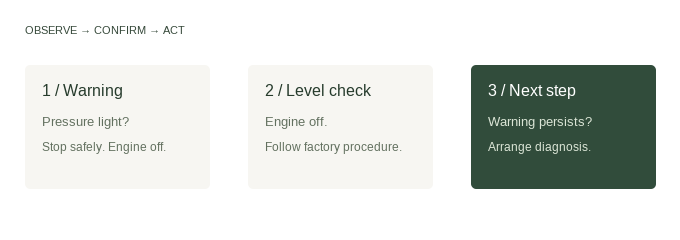
If the finding is substantial or accompanied by a pressure warning or serious noise, leave the engine off and arrange recovery. Ask which checks can be performed without unnecessary running and which results would justify dismantling. Request an explanation of particle type, quantity, and likely origin before authorizing a major repair. Do not attempt to flush the evidence away or add a product to quiet the engine before the investigation.
- Keep drain-pan contamination in mind.
- Save photographs before cleaning.
- Retain the filter if the repairer requests it.
- Record warnings and recent mechanical work.
Common questions
Does a magnet identify the failed part?
No. Magnetic response may describe some material, but it cannot identify the component or quantify engine health.
Can an oil change solve metal in the oil?
Fresh oil does not repair a wear source. The finding needs assessment in its operating context.